
The latest statement from Ayman al-Zawahri, broadcast by al-Jazeera on 4 August, does not support the claims by President Bush that they want to "impose their dark vision on the world". As I noted here after the London bombings, there is no suggestion that the muslim extremists want to change the way western countries are governed (or as George Bush put it, that "they hate our freedoms"); rather, if the statement is to be believed, the fundamentalists have a much more limited goal of encouraging western countries to stop interfering in the Middle East. al-Zawahri says:
Your salvation will only come in your withdrawal from our land, in stopping the robbing of our oil and resources, and in stopping your support for the corrupt and corrupting leaders.
Tony Blair has claimed that there is distinction between terrorists with, and those without, rational and achievable aims. He said:
And the reason for negotiating with the IRA is nothing to do with terrorism, the reason for being prepared to enter into a dialogue with Republicanism is because you do have a demand that is, I may agree or disagree with it, but you can hardly say it is a demand that no sensible person can negotiate on, it is a demand that is shared by many of our citizens in the north.
This is a rather important, and potentially dangerous, distinction for Blair to have drawn. Because if the agenda of muslim extremists is to cause western powers to stop supporting Israel and to withdraw their armies from the Middle East: well, you might not agree, but you can hardly say that it is a demand that no sensible person can negotiate on.
I was strangely fascinated by this posting by a woman who is looking for a "travel companion and a lover".
She says:
Traveling with a partner is safer, two people together can afford nicer accommodations than if they travel alone, and I *really* don’t want to be celibate for a long period of time nor am I interested in "hooking up" with random strangers I meet along the road.
It all seems so matter-of-fact (is romance so dead?). And I would have thought that it would be enticing to weirdos. But I wish Jacqueline well in her hunt for a full service travelling companion.
In 1987, the Nobel Prize-winning economist Amartya Sen showed that many famines are not caused by a lack of food production, but by a change in the incomes of poor people.
For example, a group of peasants may suffer entitlement losses when food output in their area declines, perhaps because of a local drought, even when there is no general lack of food in the country. The victims would not have the means to buy food from elsewhere, since they wouldn’t have anything much to sell to earn an income, given their own production loss. Others with more secure earnings in other occupations or in other locations may be able to get by well enough by buying food from elsewhere. Something very like this happened in the famous Wollo famine in Ethiopia in 1973, with impoverished residents of the province of Wollo unable to buy food, despite the fact that food prices in Dessie (the capital of Wollo) were no higher than in Addis Ababa and Asmera. Indeed, there is evidence of some food moving out of Wollo to the more prosperous regions of Ethiopia where people had more income to buy food.
In other cases, food prices may shoot up because of the increased purchasing power of some occupation groups, and as a result others who have to buy food may be ruined because the real purchasing power of their money incomes may have shrunk sharply. Such a famine may occur without any decline in food output, resulting as it does from a rise in competing demand rather than a fall in total supply. This is what started off the famine in Bengal in 1943, with urban dwellers gaining from the "war boom" – the Japanese army was round the corner and the British and Indian defence expenditures were heavy in urban Bengal, including Calcutta. Once the rice prices started moving up sharply, public panic as well as manipulative speculation played its part in pushing the prices sky high, beyond the reach of a substantial part of the population of rural Bengal.
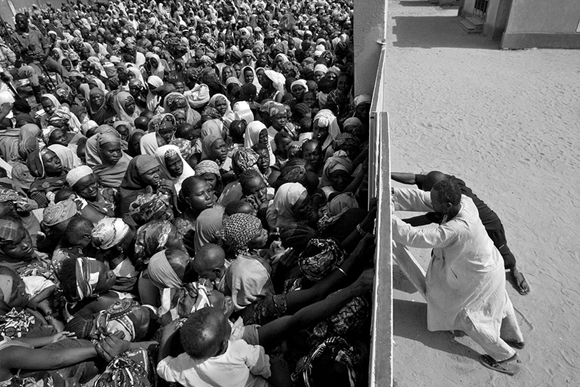
What is striking about these cases is that food aid – that is, buying surplus production from rich countries and shipping it to the places where people are hungry – may do more harm than good. What the poor people need in these circumstances is buying power, to enable them to buy the food that is already being produced but is not available to them. Food aid may depress local food prices, and thereby cause some harm to food producers and perhaps reduce future production. In these circumstances, it would be better to drop dollar bills out of helicopters than sacks of food.
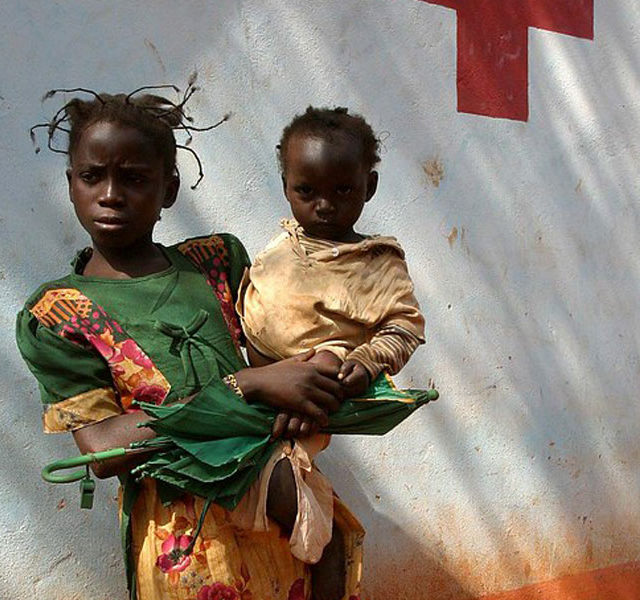
It seems that we may be in something like this situation right now in Niger. According to this news report, there is food in the markets in Niger: the problem is that the poorest people there do not have money to buy it:
Johanne Sekkenes, the mission head of MSF which is mounting the biggest emergency exercise in its history in Niger, says the current emergency could have been avoided. ‘This is not a famine, in the Somalian way,’ she said. ‘The harvest was bad in 2004 and the millet granaries are empty. Yet there is food on the markets. The trouble is that the price of the food is beyond anyone’s reach.
It has been encouraging to hear that there is now some international response to the crisis in Niger. But we we must do so in ways which deal with the real causes of the problem. Too often, our own self interest (we can provide income for our own farmers) combines with an ill-informed set of assumptions about Africa ("they can’t grow enough food to feed themselves") and leads us to support inappropriate solutions.
Hat tip: Ian
Grethe and I ran the San Francisco Marathon yesterday. This was a training run for both of us – we even ran on Saturday (which we would not have done if we had been taking this seriously).
It started very, very early (5.20am), in part so that the route could go over the Golden Gate Bridge and back without disrupting the traffic too much. It then goes through Baker’s Beach to the Golden Gate Park, and then South of Market to the SBC Stadium and then back to the start at the Ferry Building. It is fairly hilly – especially running up from Chrissie Fields on to the bridge (and the bridge is also surprisingly hilly).
Our finishing times: Grethe 3:38:39; Owen 3:05:16.
Recommended? You bet.
Recent Comments