Here’s an odd thing. Many people with free market instincts about development assistance say that they think that private sector investment, rather than spending by developing country governments, is essential to creating growth and jobs; and they argue that aid should be used to support the private sector (see this, for example).
What’s so odd about that? Well, it is odd to hear people with generally pro-market views advocating public subsidies for private industry. You see, I agree that private sector investment will drive economic growth, create jobs and reduce poverty in developing countries, and I share the scepticism about the value of state enterprises (though I am perhaps less sceptical about the value of government-provided social services such as health and education than perhaps some of these people seem to be). But despite being an old-fashioned, left-of-centre Guardian reader, I think the best way to promote private sector is not to provide industrial subsidies.
Many of the challenges facing the private sector are caused by poor government – ineffective or expensive legal services, delays and costs from corrupt bureaucracies, ropey communications and transport infrastructure, badly designed tax policies, and ineffective public utilities. So I think public sector reform is a very high priority: for the state to get out of things it shouldn’t be doing, and to improve the efficiency with which it does the things it should, especially putting an end to corruption. In many developing countries, this requires serious, long term investment – in skills, equipment, and institutional change. If we seriously want to end corruption, for example, we need to pay public sector workers a reasonable salary instead: and pay reform requires substantial, long term commitment of resources which most developing countries cannot afford. Without long term, predictable donor financing, these public sector reforms are simply not going to be possible. Government should also, in my view, provide essential public goods, including security, legal systems, basic education and health care, transport infrastructure, and democratic institutions to provide the economic, social and legal environment in which firms can safely invest.
To my mind it also seems paradoxical that right-wing and free-market commentators argue that government is such a big part of the problem (a proposition in which there is much truth) but do not conclude that it is therefore a high priority to improve the institutions of government. Instead, they seem to think that we should largely ignore government, and channel any aid that we give to the private sector instead. I cannot see how this can be a long term solution to the problem.
So those of us who believe that we have to work with the governments of developing countries, and provide significant resources to them, do not necessarily have a different view of the role of the public and private sectors in economic growth or the provision of services. Where we seem to disagree is that I do not think that industrial subsidies are likely to be a better long term investment than helping the public sector to be much better at providing an environment in which firms can invest and create jobs, and compete fairly.
All credit to Mr Blair for visiting Washington to try to persuade the US administration to make a substantial contribution to the G8 inititiative on reducing poverty. If this Reuters report is to be believed, the US is planning to announce that it will allocate some of its existing aid budget to famine relief in the Horn of Africa.
The U.S. contribution would include $674 million — enough to feed 14 million people — and a significant commitment will also be made by the British, the official said.
This is a derisory piece of window-dressing: no new money, and nothing on the scale needed to tackle the problem. Let’s hope that the UK and other G8 countries are able to put pressure on the US to come up with something more substantive in time for Gleneagles.
Generally, blogs are a pretty good way to hear from people with direct experience and expertise on important issues, without their views being intermediated by the traditional media. Blogs often provide analysis which is well-informed and evidence-based, and both deeper and broader than can be found in the mainstream media. But sadly, these qualities are not much in evidence in much of the commentary and writing on the web about the case for or against increasing development assistance.
There is a view that aid is ineffective, and often simply props up corrupt dictatorships. Some commentators argue that it should not be channeled through governments, but rather to NGOs or the commercial private sector. And some people argue that we are already generous enough, or have no responsibilities towards the poverty of others. A small number of blog authors contribute to this scepticism, by continually raising doubts about the effectiveness of aid. Writers such as Alex Singleton (who seems to have declared himself an Institute) and Tim Worstall do not seem to be indifferent to the plight of the poor, but they do have strong views about aid that do not seem to me to be consistent with the evidence. Jim, over at Our Word is Our Weapon, does an excellent job in providing detailed rebuttals to many of the points that they make.
In this post*, I draw together a list of the most egregious fallacies, and provide brief explanations of why I think they are wrong. I do not say that any individual has argued all of these points, but these are all arguments that I have seen made and which seem to contribute to an overall negative impression about aid.
Fallacy 1. We have to choose between more aid or more trade.
Allowing producers in poor countries to sell to customers in affluent markets would be of huge benefit – at least as much as doubling global aid. But many countries could not take advantage of those opportunities without complementary investment – for example, in transport infrastructure, skills or telecommunications. If we do open our markets up – as we should – this is a reason to spend more, not less, on aid, at least for the coming years. Bill Clinton’s measure (AGOA) to open US markets a little to the poorest countries has been relatively successful in part because it was accompanied by technical assistance and other aid-financed measures to help poor countries like Lesotho to make the most of the opportunities it offered. And when we introduce liberalising measures in rich countries – such as closing Rich countries are made better off, not poorer, by liberalising our markets. We should not see that as something to do instead of giving more aid: we should do it as well, for our benefit as well as the benefit of the poor.
Fallacy 2. Poor countries would be the main beneficiaries of free trade
The main beneficiaries of trade liberalisation would be middle income countries like Brazil, India and China. The very poor countries already have preferential access to many – though not all – rich country markets; and so they might well lose out from blanket competition. This is absolutely NOT a reason to delay trade liberalisation, but it is a reason to be cautious about how much it will benefit the very poor, at least in the short run.
Fallacy 3. Aid to governments is just wasted – it goes into the pockets of corrupt dictators
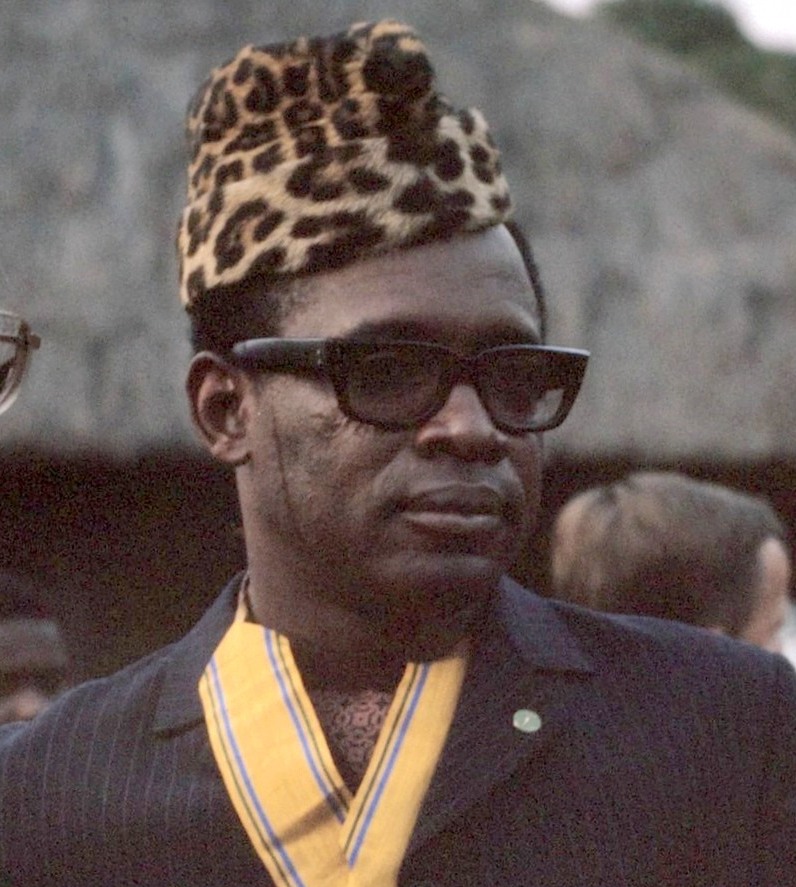
During the cold war, donors used to spend a lot of money propping up lousy governments like Mobuto in Zaire; but since the 1990s they have made spectacular efforts to get aid to countries that can use the money best. There is a lot of evidence that shows that aid is being better spent now, and producing very good results – in fact, the rate of return on aid is better than almost any other government spending programme.
Fallacy 4. Aid is better given to private charities and NGOs than to governments, which are part of the problem
Some NGOs do a very good job; but they mainly tackle the symptoms, rather than the underlying causes of poverty. Often they cannot operate on the scale needed, or in the right policy arena, to tackle the institutional weaknesses that contribute to poverty. Furthermore, the endless proliferation of NGO projects adds to the burden on the hard-pressed policy makers, public servants and others in developing countries who are doing their best with limited resources to get the job done; and by providing money through channels outside government, they weaken or remove all semblance of accountability to the local population for the delivery of services. It is true that weak government institutions are a significant part of the problem in many African countries. But if weak institutions are a cause, it follows that finding ways to improve those institutions is likely to make a significant contribution to the solution. Ignoring and bypassing them weakens them further, and delays the day when countries will have effective and accountable governments.
Fallacy 5. Extra aid in Africa could not be absorbed: it would just be wasted.
Aid to Africa per person halved in the 1990s. There is no reason to believe that if twice as much aid could be fairly well spent then – and the evidence is that, on average, it was – that it couldn’t be well spent again now. If donors made a serious effort to make it easier for recipient countries to use aid productively, much more could be used to benefit the world’s poor.
Fallacy 6. We’ve already pumped billions of dollars into Africa and it we have nothing to show for it. So we know it doesn’t work. Jeffrey Sachs tells a story about a village fighting a forest fire. They send their fire engine, which tries valiantly to douse the flames. But the fire continues to burn. Should the village conclude that fire fighting is ineffective, or should they conclude that they need more fire engines? There is no question that some aid money has been wasted – especially the politically motivated aid to badly governed countries – but that only makes it even more remarkable that on average aid is so effective. The aid that is well spent must be making a huge difference, given that it more than offsets the mistakes.
Fallacy 7. The problems that developing countries have had using aid well are mainly of their own making.
The main reasons why aid is not effective as it could be are not because the recipients waste it, but because the donors deliver it so badly. By attaching all kinds of strings and conditionality, donors make it very hard for recipients to get the best possible value for money (one aid project, for example, required bricks to be shipped all the way from Japan to build schools in Uganda, where there are perfectly good locally made bricks, increasing the cost of new schools seven-fold.). Donors refuse to make aid predictable, so it cannot be invested over a number of years and has to be spent as soon as it is available. Donors impose a battery of evaluations, appraisals, systems and other costs on the recipient Government. If donors were to think strategically about their long term interests in reducing poverty, rather than short term commercial and political gain, the aid they give could be much more effective and much more could be given and be effectively used.
Fallacy 8. Aid will solve all the problems of the poor.
More and better aid is not enough. Rich countries must reform the trading system, tackle corruption at the source (it is companies and governments from rich countries who pay the bribes that we hear so much about), open their borders to greater migration, reduce climate change, control arms exports, increase the transparency of resources into extractive industries such as diamonds and oil which pay for civil wars, ensure access to essential technologies such as medicine, and ensure that poor people have a greater voice in the international system.
Fallacy 9. America is a generous aid donor
America gives one of the lowest shares of its income of any industrialised country. The total may be big, because it has a large economy, but this just tells us that it can afford to give more. And even including private donations, the US is one of the least generous countries on earth.
Fallacy 10. Africa is all the same: corrupt, hopeless, incompetent.
Africa is a vast continent, with huge diversity. Any generalisation about Africa as a whole is almost certainly wrong about much of the continent. There are some countries that are not well governed, just as there are in Europe and the Americas; and there are many countries that are democratic and well-led, and which are experiencing economic growth. (There are also democratic countries that are not growing, and undemocratic countries that are growing.) To characterise all of Africa based on outliers like Mugabe would be like generalising about Europe based on Berlusconi.
Fallacy 11. It isn’t our fault
Quite a lot of it is our fault. We contributed to the causes, though slavery, colonialism, the cold war, and continuing economic exploitation. We have invented or propped up some of the continent’s worst dictators. Where it suited us to do so, we invented and encouraged hatred (for example, between Hutus and Tutsis – a distinction invented by Belgian colonialists). We continue to impoverish the continent by demanding free markets for the commodities we want to buy, but providing no access to our own markets to enable countries to make and sell products on which they can earn a more stable income with greater value added. We will buy their cocoa beans, but we won’t let them sell us chocolate. Where countries might have a chance of succeeding in world markets – such as beef exports from Namibia or tobacco from Malawi – we subsidise our own exports while forbidding poor countries to do the same, so that they cannot compete for lucrative markets such as in the Middle East. We sell the leaders guns and weapons and we bribe public and private officials. Our consumption of carbon fuels leads to desertification and drought, putting millions at risk from hunger, and yet we expect Angola and Nigeria to guarantee cheap, affordable oil. And then we dump our unwanted food – surplus production by over-subsidised farmers in the US, Canada and Europe – and we pretend we are feeding the hungry, when all we are doing is driving local farmers out of business (we even have the chutzpah to count this economic vandalism as aid).
Fallacy 12. It isn’t our problem
This is our problem. It is the greatest moral issue of our age. 20,000 people die every day of extreme poverty, in part because we choose not to provide the modest amount level of resources that would keep them alive. Many of us wonder what we would have done to oppose slavery or to resist the Nazis; and yet we do very little about the avoidable death of millions of people a year, and the suffering of millions more. But aside from the moral imperative to do something, it is not in our interests to ignore the problem. Extreme poverty and global inequality increases pressure on immigration and asylum, increases the risk of infectious disease, and puts our communities at risk from drugs, organised crime, and even acts of terrorism. Our collective interest in a more integrated, global, free-trading economy is put at risk if we do not make serious efforts to ensure that the benefits are shared with the world’s poor and not simply enjoyed by the rich.
Fallacy 13. The public doesn’t want to spend money on aid and doesn’t believe it works
Despite the malign efforts of a small cabal of bloggers who peddle ignorant views which verge on the racist, the British public is more generous and more willing to spend money on aid than many politicians think. According to a poll reported by Jim at Our Word is Our Weapon, 85% of people overestimated the proportion of national income we actually spend on aid, and when the true amount (0.34% at the time) was revealed, twice as many thought it was too little as thought it was too much. In another poll, a majority (52% of the total, 57% of those who expressed an opinion) agreed with a statement put to them that "Africans can solve their problems but only if they receive financial and other assistance from rich countries". A huge majority agreed that it was the responsibility of "a partnership between African and rich countries" to solve African problems, and that almost twice as many supported the statement that "most or all" of Africa’s large debts should be cancelled.
Conclusion
I feel particularly passionate about this because (a) there is a lot of empirical evidence supporting the overall benefits of aid and (b) this is, quite literally, a matter of life or death for the recipients. While I support the right of anyone to hold any views they want, and to express them as they see fit, I also believe that we all have a responsibility to ensure that our views are well informed and grounded in facts, particularly when so much is at stake.
* This is an amended version of an earlier post, which I wrote while particularly angry about a series of particularly ill-informed comments. I realise that the personal way in which I expressed my concerns detracted from the substance of the points I wanted to make. I apologise to anyone that I offended.
Anatole Kaletsky has this article in the May 2005 edition of Prospect which argues that economics has been of declining political importance – as evidenced by the absence of economic policy as an important topic in the 2005 General Election.
Since the mid-1990s, however, the idea of economics as the dominant factor in British, American or European elections has become untenable, as in country after country economic and electoral performance have diverged.
Kaletsky is right that old-fashioned economic policy debate has not been much in evidence this year, but wrong about just about everything else.
- Kaletsky is wrong to say that we have conquered boom and bust. This is a common self-deceit at this point in the business cycle: Nigel Lawson said just the same in 1988, towards the peak of the long 80s boom and before the disastrous recession that followed it. All experience tells us that there will be a down turn, whether triggered by a collapse in house prices, or the dollar, or confidence in the Euro, or energy prices, or a financial scandal arising from the failure of split-cap funds or derivative trading …. or something else completely.
- Kaletsky is wrong that using only monetary policy for demand management to stabilise the economy will lead, in the long run, to a more stable economy than using a combination of the two; indeed, one of the most significant downside risks to the economy in the coming years is the failure of the US to maintain a proper balance between fiscal and monetary policy, resulting in the catastrophic collapse in domestic savings, the unsustainable current account deficit and – eventually – the devaluation of the exchange rate that must follow. Demand management would be more successful, and more stable, if governments used both fiscal and monetary policy to pursue economic growth and price stability.
- Kaletsky is wrong that the shift of output from manufacturing to services will reduce the risk of an investment-led business cycle. Though we may invest less than we did in machine tools and factories, we invest instead in human capital, software, brands and other intangible assets that underpin the service economy. There is nothing in the theory of the investment cycle to suggest that it only applies if the investment is in physical capital.
- Kaletsky is wrong to say that the composition of our economic output makes it less volatile as we shift to "platform companies" like Dell and Nike. It is true that the production of primary commodities is more volatile than many other activities – but there hasn’t been a significant part of the economy doing that for many years. Some of the activities we have "kept for ourselves" are amongst the most volatile possible sources of income: marketing and brands can collapse in value overnight (think of Arthur Anderson), whereas a t-shirt factory can always make shirts, even if they have to cut the price a little to stay in the market. R&D, training, and marketing are notoriously volatile – being the first lines in the budget to get cut when times are bad.
- Kaletsky is wrong to say that there is no longer disagreement about the most important issues ("almost impossible for any serious politician to question the bedrock principles of the capitalist economy: private ownership, competition and the profit motive."). What about the very live debate in the context of the EU Constitution about whether we want an "anglo-saxon" economic model or a "social partners" model?
It is true that the debate is no longer in the same language as the 1970s and 1980s. But most of the key political issues of the day are issues of economic policy: from the make poverty history campaign to global warming, from pensions policy to immigration and asylum seekers, there is a profound debate being played out. In short, Kaletsky inhabits an intellectual era that does not recognise the challenges of globalisation and poverty, the environment and immigration as fundamental issues of our economic well-being.
I was very struck by this article by the BBC’s Lara Pawson, about the behaviour of ex pats living in Africa.
When aid agencies like the UN’s World Food Programme move in, African administrations tend to be let off the hook. But who can object? They’re only there to help. The aid worker goes to Africa to care for the African, to make the African healthier and more democratic. Perhaps this explains why many expatriates – even a large number of those who are in Africa to ‘do good’ – so often resort to behaviour and attitudes that reveal a superiority complex reminiscent of colonialism.
An email has flooded in, commenting on my blog, from someone calling himself "Chipper". He says:
One thing I have noticed about people in general, especially the ones from around liberal cities such as San Francisco, LA, etc is that they have no grasp on reality. I read a couple of your drivelous slants on Bush. Do you think our nation is protected by handing our enemies flowers? The fact that you are able to state your opinions are made available by our soldiers blood and sweat. Bush believes that he is making our nation safe and so do I. The world is a better place that Sadaam Hussein is out of power.
In fact, I think have been pretty careful not to write anything too uncomplimentary about George Bush, as I think it is unedifying to move to a country and then spend all your time complaining about it. When I lived in London, it used to annoy me no end when people from other countries living there complained about the UK: I used to think: "if you don’t like it, then don’t live here." But I have felt able to oppose the war in Iraq because I am criticising my own country as much as my hosts. So perhaps Chipper has correctly perceived that I do not support the war. But moving along to the substance of Chipper’s points: a. There is no evidence that Iraq intended or threatened any harm to America; the current official justification for the war in Iraq is that Saddam Hussein was guilty of oppression and cruelty to his own citizens (which is true); but not even the US Government is now saying that the war in Iraq contributed to "making the US safe"; b. It is hard to argue that the US is safer as a result of its military action in Iraq. Both within Iraq, and internationally, the result has been greater hostility to American policies and people. c. As far as I can discover, Osama Bin Laden has never expressed any hostility to the way that Americans choose to live in the US. His hostility, and that of his followers, seems to be directed to the way in which the US acts abroad, particulary in the Middle East. If the priority for US foreign policy is to "make our nation safe" then it would be more effective, and cost fewer lives of Americans and others, to pursue different policies overseas; in particular, the US’s determination to put its own economic interests ahead of the livelihoods and rights of the citizens of other countries has contributed to hostility to America and thereby reduced its security. d. As is now becoming clear, the US is stronger when it acts with the backing of the international community, as expressed by the United Nations. If the US had been prepared to be a little more patient, to listen a little more and to help build an international consensus, there would have been a greater contribution both to the military effort, and to the subsequent reconstruction of Iraq. As a result, the cost to the US in terms of lives and money would have been less, and the operation would have been a success. So, since Chipper has asked, my answer is not that I think that the United States is "protected by handing our enemies flowers", but that the policies of the current administration, supported by the UK, has made the United States less rather than more safe; and that long term security for the US would be more likely to result from changes in US foreign and economic policies, and greater willingness to work in partnership with the international community, and not from the mere exercise of military power.
As I was crossing Park Lane today from Hyde Park at Brook Gate, I stumbled across a new "Animals At War" memorial. The memorial, designed by sculptor David Backhouse, is carved from Portland stone, with bronze relief of different animals. The inscription reads:
Animals In War. This monument is dedicated to all the animals that served and died alongside British and allied forces in wars and campaigns throughout time. They had no choice.
The monument lists a variety of animals that have been used in war, including horses, dogs, dolphins, elephants, pigeons and even glow worms. Now, I have been vegetarian since I was a teenager, largely for ethical reasons. (For the record, I would not object to people eating animals if this is necessary for survival; but I do not agree with eating animals for pleasure). But though I think we should accord animals greater ethical status, I cannot persuade myself that this memorial is a good use of anyone’s money. The memorial, which cost £1.4 million, was largely paid for by novellist Jilly Cooper, who formed a trust with Andrew Parker-Bowles (the first husband of Camilla Parker Bowles, who – Camilla, not Andrew – is now Princess of Wales, though we all have to pretend that she is not.) In my view, a more fitting tribute to the animals who died would have been to use this money to help people who need the money to educate their children or have access to the health care they need. Or perhaps it could have been used to build some sporting facilities in Hyde Park, to promote more healthy lifestyles for young people. There is a particularly ludicrous article in the Telegraph about the memorial. Princess Anne is quoted as saying:
Until recently, most of our relationships with animals have been as a working partnership and in any working partnership, there’s an inherent responsibility to look after one another. I do think it’s important to remember that man’s relationship with the natural world has shared everything – the good times and the bad.
Perhaps we might also have a memorial to the 500,000 animals killed for meat each hour in US alone?
Recent Comments