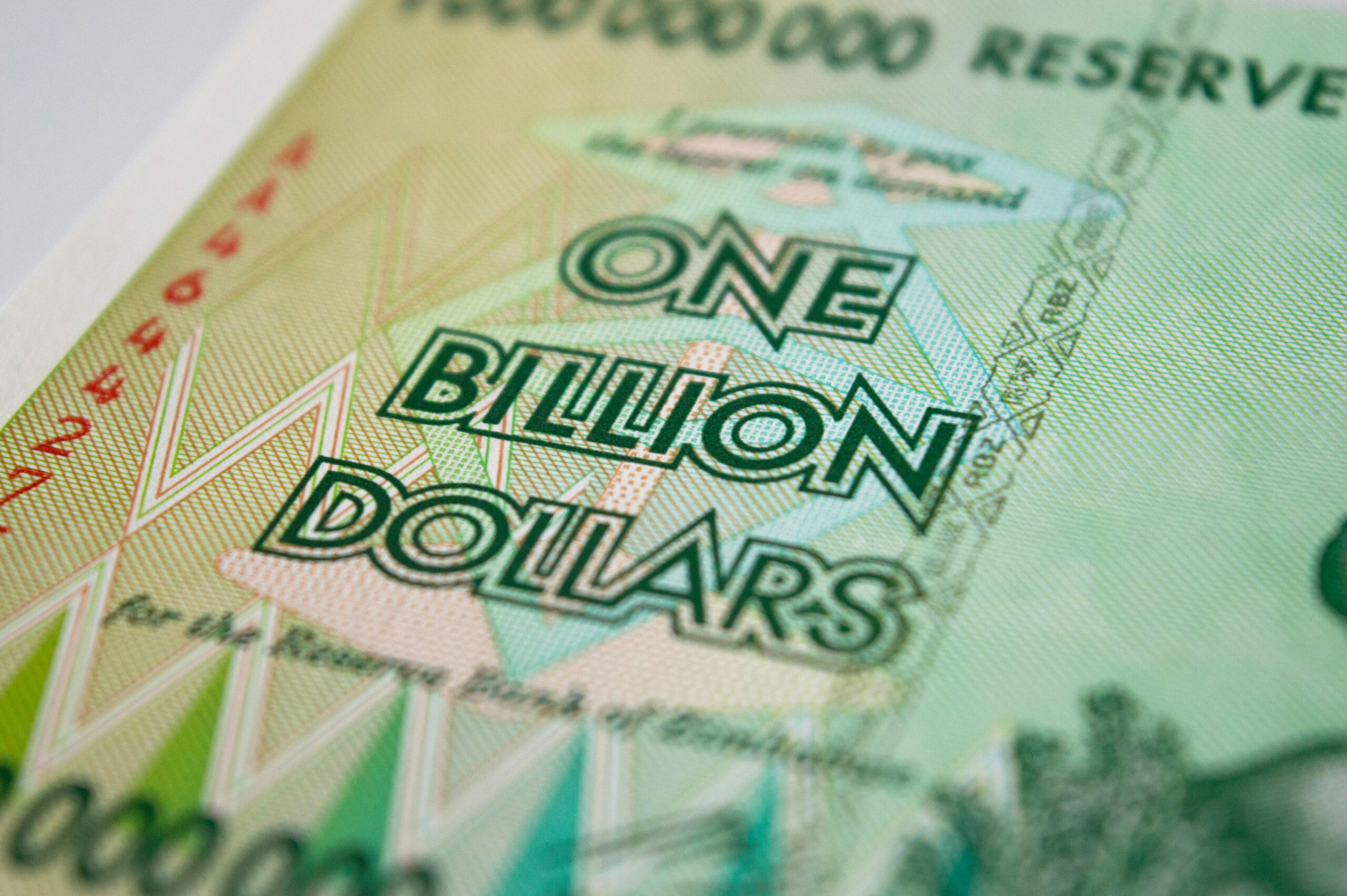
Aid sceptics like to say that the west has spent more than a trillion dollars on aid to Africa since independence. See for example Dambisa Moyo in the Wall Street Journal or The Catholic Herald. Bill Easterly makes the same claim on page 4 of The White Man’s Burden. This claim is often made by people who argue that aid does not work.
Though the point is often made, it it isn’t true. According to OECD DAC statistics, since aid began in the 1960s donors have given a grand total of $502 billion to sub-Saharan Africa, which is worth about $866 billion in today’s prices. (Table 29; excludes debt relief.)
The G-20 countries have, over the whole history of aid, given less aid to sub-Saharan Africa than they spent on fiscal stimulus in the single year of 2009.
(This fact comes from my recent article, An Open Letter to Aid Skeptics, in the latest edition of the Center for International Relations Forum journal (pdf).)




13 responses to “Trillions of dollars of aid?”
Doesn’t the comprehensiveness of the DAC data shrink as we move further into the past?
Well, the harsh reality is that the West needs to spend less on Aid to Africa and instead spend it on their own countries which are in danger of going broke. If that happens Africa won’t get a thing.
A very harsh view would be to leave Africa to it, and let nature take its course, but that wouldn’t be human to do that. Instead we continue to be a parasite on this Earth, increasing out population and exhausting the worlds resources. What the world needs is a for a huge disease to hit us and cut the population to a size where the world can recover. Or one of those disaster movies to come true. Horrible thought, but maybe its whats needed.
Owen replies: I don’t agree. That approach is equivalent to saving money by cutting essential investment in infrastructure. Our future prosperity, security and health depend in part on living in a more equal world. Cutting aid – which is a very small part of public spending – would result in small short-term savings with huge long-term costs both for our own citizens and the people of developing countries. It would be a very short-sighted policy to cut this.
The success of a country should be reliant upon its own desire and merit for success. Not by the funding by wealthier nations that got their by themselves. Africa is not owed anything by any other continent.
So one good exaggeration deserves another?
You state that Moyo and Easterly claim that we have spent trillionS on Aid to Africa.
This is not true. In both articles that you cite Moyo claims that 1 trillion in Aid has been spent, not trillionS. She may be exaggerating a bit, but so are you.
I don’t have Easterly’s book at hand but I am willing to bet that he is also more careful in his claim than you have been in citing him. Prove me wrong.
This is precisely the problem with the whole Aid debate. Both sides are willing to bend the facts to support their objectives.
Owen replies: that’s a fair cop. Dambisa Moyo says “more than a trillion dollars”. Sorry about that. (She’s still wrong, though.) I don’t have Bill Easterly’s book to hand as I’m currently travelling, but my recollection is that his figure was 2.4 billion dollars.
You might be missing the point of Aid. Aid is not given to really promote development. Most aid is given politically and well, to make rich government “sleep at night”. That being said there is no reason to believe that more aid will make a difference. Lump sum transfers have not affected the productivity of poor countries and there is no reason to believe they ever will. The reverse might even be the case.
Owen replies: Or it might not. I live in Ethiopia and I see aid working every day to improve people’s lives, whether or not it increases productivity in poor countries.
Foreign aid is like someone coming to your home and paying all your bills every month. You will lose the incentive to work for a living and become dependent on the hand outs. Aid dependency is a sickness that needs to be cured with assistance rather than aid. Assistance to grow their own crops, develop their own businesses, infrastructure, country etc. That is the answer. Direct targeted assistance.
Owen,
With regards to Justin’s point, Bill Easterly doesn’t specify that trillions of dollars have gone to Africa on page 4 of
this edition of The White Man’s Burden, but just talks about the total volume of aid. That’s not to say he makes the mistake you highlight elsewhere in the book, or in a different edition.
I think it’s also pertinent to add that donor intent matters nearly as much as the amount given. We all know that aid before 1991 was much more about strategic interests than poverty reduction, so why should we expect that this kind of aid would have an impact on growth?
The better question might be “Does poverty-oriented aid work?” Asking this question, and then excluding the kinds of aid that never had poor people in mind could be a far more productive exercise.
I agree the aid skeptics and the public in general tend to exaggerate the amount of aid that has been given. However, their basic point is that there is very little to show for what has been given– whether it is billions or a trillion. On this larger point, I agree. Even where the amounts have been small in comparison to OECD country budgets, as a percentage of recipient country GDP, aid IS significant, and yet all we seem to be able to do is short term relief. I just recently returned to Mali where I started development work in 1988 and was depressed to see that so little progress has been made in 22 years, in spite of a high level of political stability, democracy and significant (relative to the size of the local economy) aid flows. While you are right to correct misperceptions of aid levels, I don’t think you want to take the position that aid has achieved all expected impact.
excellent point owen. and if we add to that the amount given back in debt repayments during that time the net flows are almost certainly in the direction of the OECD. does anyone have that number to hand?
Would direct you to this blog post from John Quiggin I favourited long ago.
Updating his numbers, $866 billion to SSA over 50 years is about 34 cents (in today’s money) per person on the continent per week.
What? We’ve been giving Africans 34 cents per week and there’s still poverty? Shocking. Outrageous. Clearly aid has failed.
C-sez, that a very weak causal argument. It’s like saying I given x amount of fertilizer to my plant but it still doesn’t grow. Clearly the fertilizer has failed.
It’s so easy to dimiss aid and not the policies that come with it.
[…] sent to Africa in the form of “aid” over the past half-century since colonial independence. Some estimates put it in the trillions, while the OECD and others claim it’s merely in the 800 bil…. Regardless, the sums are […]
[…] sent to Africa in the form of “aid” over the past half-century since colonial independence. Some estimates put it in the trillions, while the OECD and others claim it’s merely in the 800 bil…. Regardless, the sums are […]